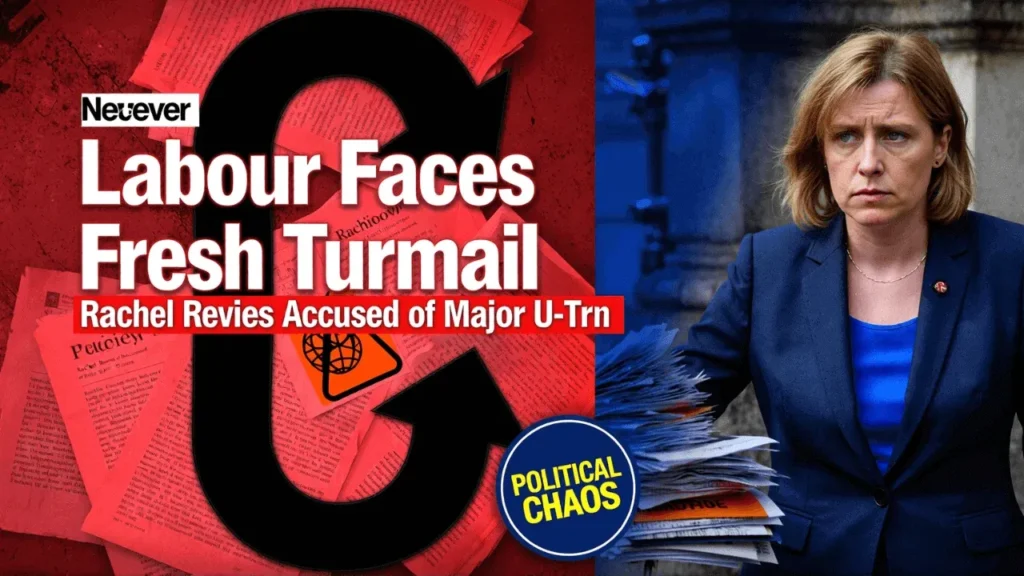
Rachel Reeves is once again under intense political scrutiny after fresh accusations emerged suggesting she may be preparing another significant policy change, reigniting claims of internal turmoil within the Labour Party. The developments have sparked debate across Westminster, with critics questioning Labour’s consistency on economic policy while supporters argue the party is responding responsibly to a changing financial landscape.
Why Rachel Reeves Is Facing Renewed Accusations
The latest claims centre on reports that Labour may reconsider or soften elements of its previously stated economic approach. Critics argue that this has created confusion about the party’s long-term direction, with opponents framing the situation as evidence of wavering leadership.
According to critics, repeated adjustments risk undermining confidence, especially when Labour has consistently stressed the importance of stability, fiscal discipline and predictability in public finances.
What Political Opponents Mean by a “Major U-Turn”
In political language, a U-turn refers to a clear reversal of an earlier policy position. In this case, accusations focus on whether Labour is stepping back from economic commitments designed to reassure both voters and financial markets.
Such reversals can be damaging if they appear reactive rather than strategic, particularly for a party seeking to emphasise seriousness and reliability.
Labour’s Economic Strategy Under the Spotlight
Labour’s recent economic strategy has been built around cautious spending, value for money and avoiding unfunded commitments. Under Reeves, the party has sought to distance itself from past perceptions and demonstrate that it can manage the public finances responsibly.
This careful positioning was designed to appeal to undecided voters concerned about economic stability, but it has also sparked internal debate about how far caution should go.
How Critics Are Framing the Situation
Political opponents have seized on the controversy, arguing that Labour lacks a clear and consistent economic vision. They claim that frequent reviews and adjustments suggest uncertainty rather than adaptability.
For critics, the issue is as much about perception as policy, with headlines focusing on “turmoil” shaping public opinion.
Labour’s Response to Claims of a Policy Reversal
Labour sources have strongly pushed back against suggestions of a U-turn. They argue that reviewing policy in light of economic conditions is a sign of responsibility, not weakness.
Supporters of Reeves say that careful reassessment should not be confused with indecision, particularly during periods of economic volatility.
Why the Timing Matters Politically
The timing of the accusations is politically sensitive. With voters increasingly focused on living costs, public services and economic security, any suggestion of uncertainty can be damaging.
Internally, the party is also keen to maintain unity and momentum as it positions itself for future electoral challenges.
The Balance Between Principle and Pragmatism
Labour’s leadership faces a delicate balancing act. Holding rigidly to policies in a changing economic environment can be risky, but frequent changes can erode trust.
This tension lies at the heart of the current debate and reflects wider challenges faced by opposition parties.
How Voters May View the Accusations
Voter reactions to alleged U-turns vary. Some see them as sensible adjustments, while others interpret them as signs of unreliability.
For undecided voters, repeated claims of inconsistency can reinforce doubts about a party’s readiness to govern.
The Role of Media Scrutiny
Media coverage has amplified the controversy, with commentators divided over whether the situation reflects genuine instability or political point-scoring.
Managing the narrative will be crucial if Labour wants to prevent the issue from overshadowing its broader message.
Why Economic Credibility Remains Crucial for Labour
Economic credibility is central to Labour’s electoral prospects. Past doubts about financial competence have weighed heavily on the party, making any controversy involving the shadow chancellor particularly sensitive.
Maintaining confidence in Labour’s economic leadership is therefore a top priority.
What This Means for Labour’s Future Strategy
The episode may influence how Labour presents future policies, with greater emphasis on flexibility and review. While this could reduce the risk of sudden reversals, it may also invite further criticism.
Clear communication will be essential to reassure both voters and party members.
What Happens Next for Rachel Reeves
Rachel Reeves is expected to continue defending Labour’s economic approach while addressing concerns about consistency. Her response in the coming months will play a key role in shaping whether the accusations gain lasting traction.
How effectively she communicates Labour’s position could determine whether the controversy fades or deepens.
Final Thoughts
The accusations facing Rachel Reeves highlight the intense scrutiny applied to Labour’s economic leadership. In a challenging political and economic climate, even the perception of inconsistency can trigger significant debate.
Whether this episode becomes a lasting problem or a brief distraction will depend on Labour’s ability to maintain unity, communicate clearly and convince voters that it offers stable and credible leadership. As the discussion continues, attention will remain firmly on how Labour balances flexibility with the firm direction expected of a party seeking to govern.