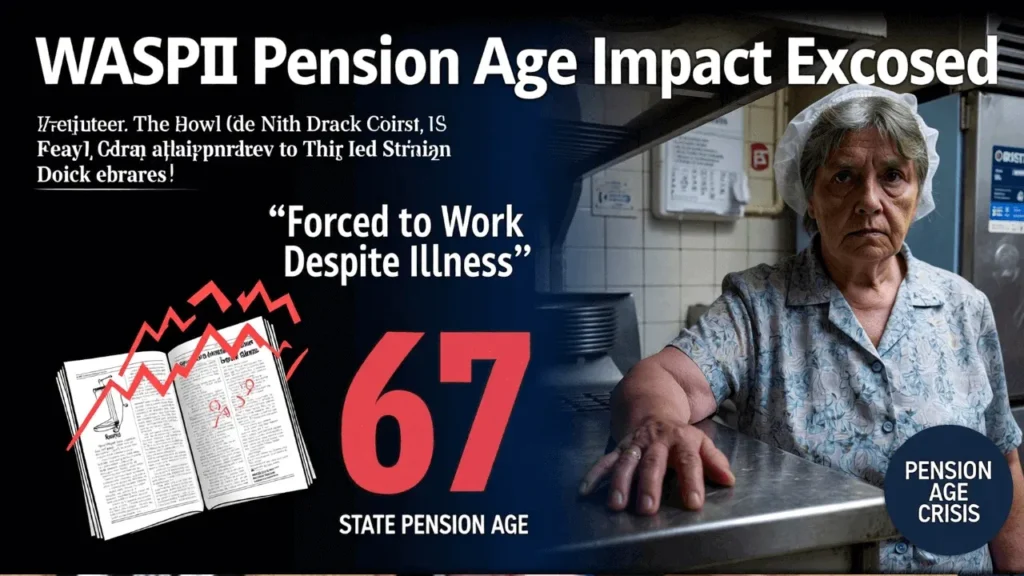
The long-running controversy surrounding State Pension age changes for women born in the 1950s has once again returned to the spotlight, as real-life stories continue to reveal the lasting consequences of the policy. Among the most striking accounts are women who, despite decades of work and worsening health, feel compelled to remain in physically demanding jobs simply to survive financially.
What the WASPI Campaign Represents
The Women Against State Pension Inequality (WASPI) campaign represents women born in the 1950s who were affected by changes to the State Pension age. Many of these women expected to retire at 60, only to discover—often with limited notice—that they would need to wait several more years.
The campaign does not oppose equal treatment between men and women. Instead, it focuses on how the changes were introduced and communicated, arguing that insufficient notice caused significant financial and emotional hardship.
How State Pension Age Changes Were Implemented
Historically, women in the UK could claim their State Pension earlier than men. Legislation introduced over several years aimed to equalize and then raise the pension age for both sexes, reflecting longer life expectancy and concerns about public finances.
While the policy objective was equality and sustainability, critics say the speed of the changes, combined with poor communication, left many women unprepared to adjust their retirement plans.
Why Communication and Notice Matter
Retirement planning is typically based on long-term expectations. When those expectations change suddenly, people may have little opportunity to save more, retrain, or adjust working arrangements.
WASPI supporters argue that clearer and earlier communication could have reduced the shock and allowed women to make informed choices about work, savings, and health.
The Reality for Women in Physically Demanding Jobs
Many women affected by the pension age changes spent their working lives in lower-paid, physically demanding roles such as catering, cleaning, and care work. These jobs often involve long hours on their feet, lifting, and repetitive tasks.
As women age, the physical toll of such work becomes harder to manage, particularly for those living with chronic health conditions.
Why Personal Stories Resonate So Strongly
Individual accounts help bring clarity to complex policy debates. When a woman explains that she must continue working despite illness, it highlights the gap between policy assumptions and lived reality.
These stories resonate because they reflect the fears and experiences of thousands of others in similar circumstances.
The Case of a Dinner Lady Still at Work
Stories involving school dinner ladies have attracted attention because the role is familiar and physically active. Preparing meals, standing for extended periods, and managing busy school environments require stamina and good health.
For someone coping with illness, continuing in such a role can be exhausting and emotionally draining, yet many feel they have no alternative.
Illness and the Pressure to Keep Earning
Women affected by delayed pension access may not qualify for sufficient financial support if they are judged capable of some form of work. This can leave them continuing employment despite declining health.
Financial insecurity, combined with physical strain, can worsen existing conditions and contribute to anxiety and stress.
Why Early Retirement Is Often Not Realistic
There is a common assumption that women can simply retire early. In practice, early retirement often means relying on limited savings or accepting a significantly reduced income.
For many affected women, this is not financially sustainable.
The Importance of the State Pension
Lower lifetime earnings and career breaks for caring responsibilities mean many women have limited private pension savings. As a result, the State Pension plays a crucial role in their financial security.
When access to that pension is delayed, the pressure on household finances increases sharply.
Benefits and the Waiting Period
Some women turn to working-age benefits while waiting to reach State Pension age. However, benefit systems are often complex and stressful, particularly for older claimants.
Assessments and conditional requirements may not reflect the realities faced by people nearing retirement age.
Why Campaigners Say Hardship Continues
WASPI supporters argue that the impact of pension age changes did not end once equality was achieved. Many women are still dealing with the consequences years later.
They maintain that unresolved hardship remains a serious issue for those affected.
Government Position and Ongoing Debate
Successive governments have acknowledged concerns about communication but have consistently stated that the changes were lawful and applied equally.
This position has frustrated campaigners, who believe recognition of harm has not been matched by meaningful action.
Health at the Centre of the Issue
Health becomes less predictable with age, and policies that assume people can simply work longer do not always account for this reality.
For women already managing illness, delayed pension access can have serious consequences for wellbeing.
Emotional Impact on Affected Women
Beyond financial strain, uncertainty about the future can cause anxiety and distress. Many women report feeling overlooked after decades of contributing through work and caring roles.
The sense of being unheard adds to the emotional burden.
Calls for Fair Resolution
WASPI campaigners continue to call for fair and timely compensation, focusing on transitional justice rather than reversing pension age equality.
They argue that acknowledging harm is essential to restoring trust.