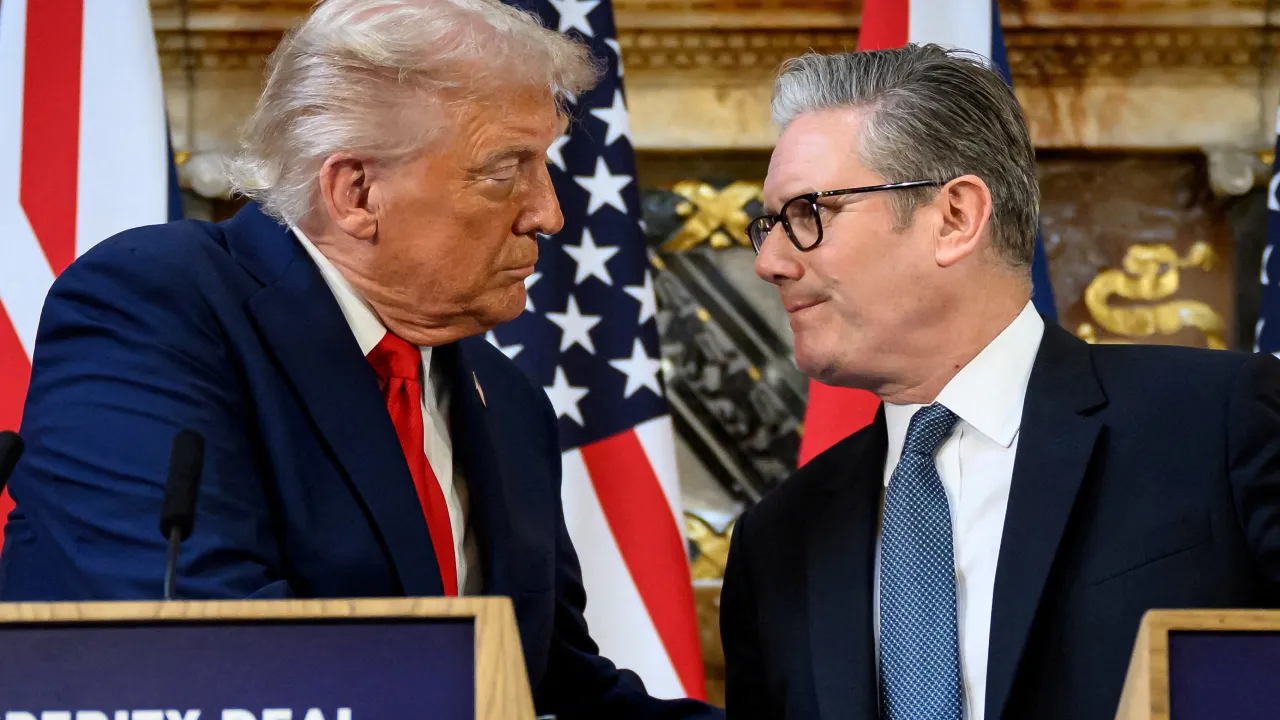
The FTSE 100 came under renewed pressure as global markets reacted to escalating political tensions involving the United States, renewed tariff threats, and diplomatic uncertainty surrounding Greenland. Investors across London and Europe turned cautious, with risk sentiment weakening amid concerns that trade disputes between allies could spill into wider economic disruption.
Market analysts noted that even indirect political signals can influence the FTSE 100, particularly when they involve the United States, one of the UK’s most important trading partners. As uncertainty grows, traders are reassessing exposure to sectors most vulnerable to tariffs, currency swings, and geopolitical instability.
Why the FTSE 100 Reacts Strongly to Global Political Risk
The FTSE 100 index is heavily weighted toward multinational companies with significant overseas revenues. Energy giants, pharmaceutical firms, mining companies, and financial institutions all feature prominently, making the index especially sensitive to international developments.
When tariff threats resurface, investors worry about rising costs, disrupted supply chains, and reduced demand in key export markets. This explains why the FTSE 100 often reacts sharply to global political news, even when the UK is not directly targeted.
In the latest session, market sentiment weakened after comments linked to potential trade penalties against allied nations. These remarks raised fears that economic pressure could once again become a tool of foreign policy, unsettling long-term investment planning.
Greenland Tensions Add to Investor Uncertainty
Although Greenland is geographically distant from the UK, its strategic importance has implications for global security and trade routes. Renewed political attention on the territory has amplified broader concerns about diplomatic stability among Western allies.
For financial markets, stability between major economies is essential. Any suggestion of discord within established alliances can lead to short-term volatility, particularly in indices like the FTSE 100, where investor confidence plays a central role.
Market participants are closely watching how UK leadership responds, as clear diplomatic positioning can help calm nerves and reduce speculation-driven selloffs.
Trade Tariffs and Their Potential Impact on FTSE 100 Companies
Tariffs are a recurring concern for investors because they can directly affect corporate earnings. Many FTSE 100 firms rely on cross-border trade, global sourcing, and international consumer markets.
Industries most exposed include:
- Pharmaceuticals, due to regulatory and pricing pressures
- Mining and commodities, which depend on global demand
- Manufacturing, where supply chains span multiple countries
- Financial services, sensitive to market confidence and capital flows
Even the possibility of tariffs can prompt investors to reassess valuations. This defensive positioning was evident as the FTSE 100 edged lower alongside declines in other major global indices.
UK Government Response and Market Confidence
The UK government has sought to strike a balanced tone, emphasizing dialogue, cooperation, and respect for international norms. From a market perspective, consistency and predictability in foreign policy are crucial.
Investors generally prefer measured responses over escalation. Clear communication from political leaders can help stabilize markets by reducing uncertainty. Analysts suggest that any reassurance from Downing Street regarding trade relations and alliance commitments could support short-term recovery in the FTSE 100.
However, markets remain cautious until there is greater clarity on whether tariff threats will translate into concrete policy actions.
How Global Markets Are Influencing the FTSE 100
The FTSE 100 does not operate in isolation. Movements in US and European markets often influence London trading, especially during periods of heightened risk.
Recent declines in global equities reflected a broader “risk-off” mood, with investors moving funds into traditionally safer assets. Currency movements also played a role, as fluctuations in the pound can impact overseas earnings for UK-listed multinationals.
While a weaker pound can sometimes support the FTSE 100, persistent geopolitical uncertainty tends to outweigh currency benefits.
Short-Term Outlook for the FTSE 100
In the near term, the direction of the FTSE 100 is likely to depend on political developments and official statements. Any easing of tensions or signals of diplomatic engagement could help restore confidence.
Conversely, further escalation in trade rhetoric may lead to continued volatility. Analysts advise investors to monitor sectors with defensive characteristics, such as utilities and consumer staples, which often perform more steadily during uncertain periods.
Long-term fundamentals for many FTSE 100 companies remain intact, but short-term sentiment will continue to be shaped by external factors.
What Investors Should Watch Next
Key areas of focus for investors include:
- Official UK statements on trade and international relations
- Market reactions in the US and Europe
- Currency movements affecting multinational earnings
- Sector-specific updates from major FTSE 100 firms
Staying informed and maintaining a diversified approach remains essential during periods of uncertainty.
As diplomatic discussions continue and markets await clarity on trade policy, the FTSE 100 is likely to remain sensitive to headlines, making stability and clear leadership crucial for restoring investor confidence.

Hi, I’m Faiq, the person behind Asdbn. I started this website to share mobile and tech news in a simple and honest way. I regularly follow smartphone launches, updates, and trends, and I like to write about things that are actually useful for readers. My focus is to keep the content clear, genuine, and easy to understand, so anyone interested in mobile and technology news can benefit from it.