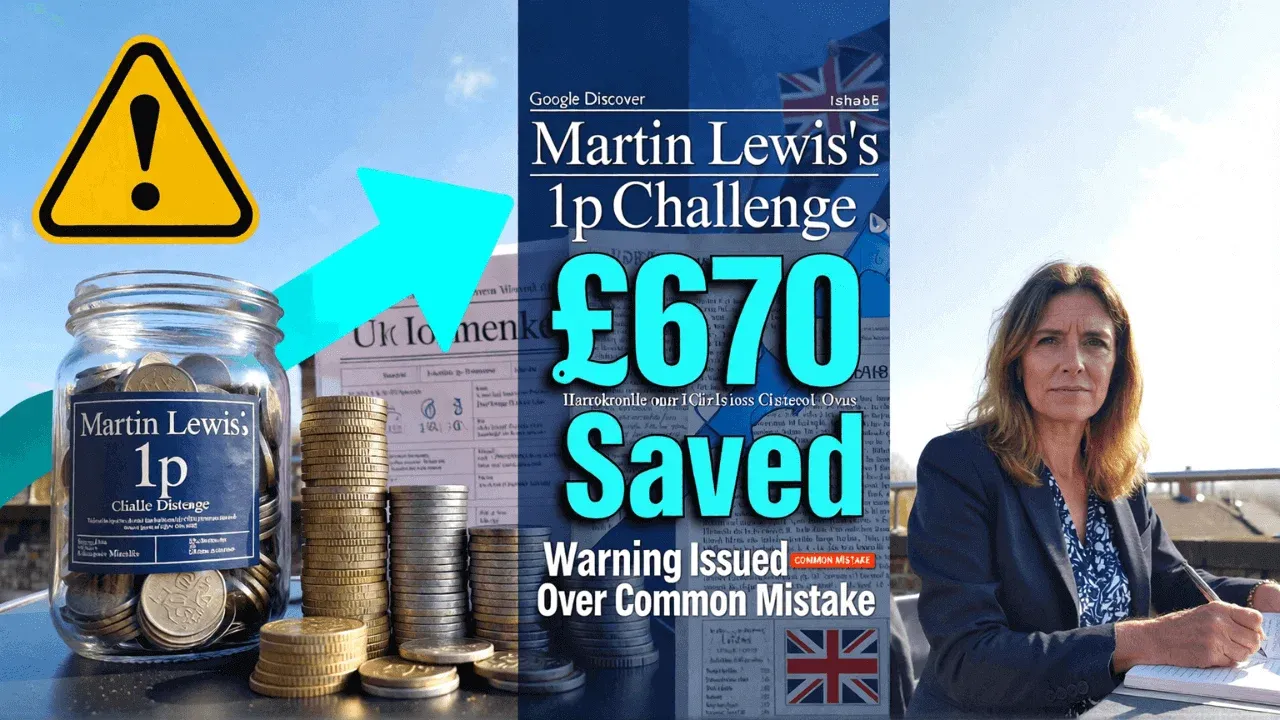
Martin Lewis’ 1p savings challenge has become one of the most talked-about money habits in the UK, especially among people struggling to save during ongoing cost-of-living pressures. Designed to make saving feel achievable rather than overwhelming, the challenge has quietly helped thousands put money aside without strict budgeting. One saver has now revealed how the method helped them accumulate around £670 in just over a year, but financial experts are warning that a common mistake could prevent others from seeing the same results.
What the 1p Savings Challenge Is and How It Works
The 1p challenge is built around gradual progression. On day one, you save just 1p. On day two, you save 2p. Each day, the amount increases by exactly 1p. By day 365, the daily contribution reaches £3.65.
When added together, these small daily amounts total £667.95 over a year. Many savers round this up mentally to £670, which helps reinforce the sense of achievement at the end of the challenge.
Why Saving 1p a Day Feels So Achievable
The psychological appeal of the challenge is its tiny starting point. Saving 1p does not feel like a sacrifice, which removes the fear that often stops people from saving at all. Instead of focusing on a large monthly target, savers focus on one small action each day.
This approach helps build consistency and confidence. Over time, saving becomes a habit rather than a stressful financial decision.
How One Saver Reached £670 Without Feeling the Strain
The saver who shared their experience said the biggest surprise was how little impact the challenge had on their daily life. Early contributions were barely noticeable, and even later amounts felt manageable because the increase was so gradual.
By the end of the year, the saver had built a meaningful pot of money without cutting back sharply or changing their lifestyle. The result was a quiet but powerful reminder that small actions can add up.
Why the Challenge Has Gained Popularity During Cost-of-Living Pressures
With household bills rising, many people believe saving is impossible. The 1p challenge challenges this assumption by proving that saving does not need to begin with large sums.
It reframes saving as a daily habit rather than a financial burden, which is why it resonates with people on tight or fixed incomes.
Martin Lewis’ Message About Small, Consistent Wins
Martin Lewis has repeatedly highlighted that financial resilience is often built through consistency rather than income level. The 1p challenge reflects this philosophy by focusing on behaviour change rather than high returns.
The emphasis is on showing people that saving something is always better than saving nothing.
The Common Mistake Experts Are Warning About
Financial advisers say the most common mistake is trying to “catch up” aggressively after missing days. Some savers attempt to deposit large lump sums to compensate, which can place unnecessary strain on already stretched budgets.
This pressure often leads people to abandon the challenge entirely. Experts stress that missing days is not a failure.
Why Skipping Days Does Not Undo Progress
The goal of the challenge is habit-building, not perfection. Missing a day or two does not cancel out previous savings. Treating missed days as a reason to quit is one of the biggest barriers to success.
Flexibility is part of what makes the challenge sustainable.
Another Overlooked Issue: The Later Stages
Some people forget to plan for the final months, when daily contributions approach £3 or more. While still relatively small, these amounts can feel more noticeable if budgets are tight.
Experts advise checking the full schedule early so there are no surprises later on.
Where Savers Are Keeping Their 1p Challenge Money
Many people choose to store their challenge savings in a separate account or digital savings pot. Keeping the money separate reduces the temptation to dip into it for everyday spending.
Out of sight often means out of mind, which supports consistency.
The Role of Banking Apps and Automation
Modern banking apps have made the challenge easier than ever. Some allow automatic daily transfers, removing the need to remember each contribution.
Automation reduces friction and improves completion rates, although manual saving can still work just as well.
What Happens After the Challenge Ends
Many people use the £670 as an emergency fund, holiday savings or a buffer against unexpected bills. Others continue the habit by switching to a regular monthly savings plan.
Experts warn against stopping completely, as momentum is one of the most valuable outcomes of the challenge.
Final Thoughts
The success of Martin Lewis’ 1p challenge lies in its simplicity. By starting small and increasing gradually, it proves that saving does not need to feel intimidating or restrictive. For one saver, it quietly delivered £670 without stress.
However, experts emphasize that flexibility is essential. Missing days, adapting amounts and avoiding unnecessary pressure are all part of sustainable saving. Approached realistically, the 1p challenge remains a powerful reminder that meaningful financial change often begins with the smallest steps.

Hi, I’m Faiq, the person behind Asdbn. I started this website to share mobile and tech news in a simple and honest way. I regularly follow smartphone launches, updates, and trends, and I like to write about things that are actually useful for readers. My focus is to keep the content clear, genuine, and easy to understand, so anyone interested in mobile and technology news can benefit from it.