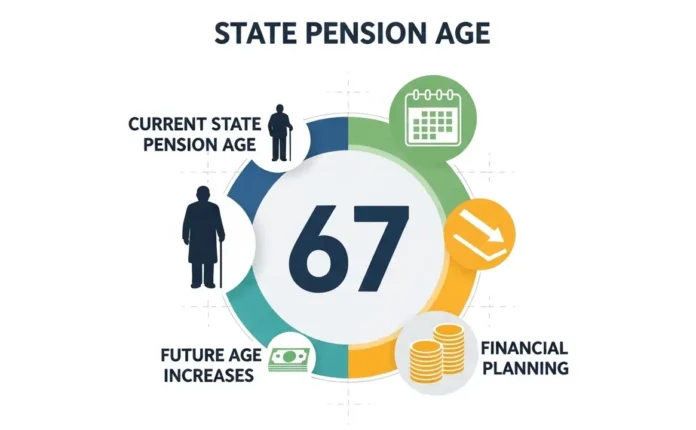
The idea of retiring comfortably has long been tied to the age of 65. However, that era is officially behind us. In 2026, the Full Retirement Age (FRA) for Social Security reaches its final step under current U.S. law—67 years old. This change affects millions of Americans planning their financial future and has sparked renewed debate about whether retirement as we know it is becoming harder to achieve.
While headlines suggesting the “end of retirement at 67” may sound alarming, the reality is more nuanced. Social Security is not ending, and benefits are not disappearing. Instead, workers must better understand how claiming age affects monthly payments and long-term financial security.
What Full Retirement Age Really Means
The Full Retirement Age is the point at which a worker becomes eligible to receive 100% of their earned Social Security benefits. Claiming benefits before this age leads to permanent reductions, while delaying benefits beyond FRA increases monthly payments.
For individuals born in 1960 or later, FRA is now firmly set at 67. This marks the conclusion of a gradual increase that began decades ago, when the standard retirement age was just 65.
It is important to note that Medicare eligibility remains at age 65. Even though full Social Security benefits are delayed, healthcare access does not change.
Why the Retirement Age Was Increased
The gradual increase in FRA was introduced to address long-term financial pressure on the Social Security system. Americans are living longer, which means benefits are paid out over more years than originally anticipated.
When the retirement age was set at 65, life expectancy was significantly lower. Today, the average American lives well into their late 70s, placing additional strain on retirement funding. Raising the FRA spreads benefit payments over a longer working life without cutting benefits outright.
By 2026, this transition officially ends, locking the full retirement age at 67 unless Congress passes future reforms.
Social Security Full Retirement Age Chart by Birth Year
Understanding where you fall based on your birth year is essential for accurate retirement planning:
- 1943–1954: FRA is 66
- 1955: FRA is 66 and 2 months
- 1956: FRA is 66 and 4 months
- 1957: FRA is 66 and 6 months
- 1958: FRA is 66 and 8 months
- 1959: FRA is 66 and 10 months
- 1960 and later: FRA is 67
This table confirms that 2026 represents the final adjustment, not a new increase.
How Claiming Early or Late Affects Your Benefits
You can begin claiming Social Security as early as age 62, but doing so comes at a cost. Benefits claimed at 62 are reduced by up to 30% compared to waiting until full retirement age.
On the other hand, delaying benefits past FRA increases payments by about 8% per year, up until age 70. For retirees who expect a longer lifespan, delaying can significantly increase lifetime benefits.
Example:
- Claim at 62: Approx. $700 per month
- Claim at 67: Approx. $1,000 per month
- Claim at 70: Approx. $1,240 per month
The Earnings Test Before Full Retirement Age
If you work while receiving Social Security before reaching FRA, your benefits may be temporarily reduced due to the earnings test. In 2026, individuals under FRA can earn up to $65,160 annually before benefits are withheld.
Once you reach full retirement age, this limit disappears entirely. Any withheld benefits are recalculated later, meaning the reduction is not permanent.
Why More Changes Are Being Discussed
Despite the FRA increase to 67, Social Security still faces long-term funding challenges. Projections suggest the trust fund could face shortfalls in the next decade without legislative action.
Some policymakers have floated ideas such as gradually raising the retirement age beyond 67 or adjusting benefit formulas for higher earners. These discussions are ongoing, and no new laws have been enacted as of 2026.
For now, workers in their 40s and 50s have time to prepare, while those nearing retirement should focus on maximizing current rules.
Planning Smartly Around the New Retirement Reality
With full benefits now tied to age 67, retirement planning requires a more strategic approach. Experts recommend diversifying income sources, including 401(k) plans, IRAs, personal savings, and part-time work.
Building an emergency fund to cover the gap between early retirement and FRA can reduce financial stress. Couples should also coordinate claiming strategies to maximize survivor benefits.
The Bottom Line on Retirement at 67
Retirement at 67 is not disappearing—but it is becoming the new standard. The completion of the FRA increase in 2026 marks a significant milestone in Social Security history.
Americans who stay informed, plan early, and treat Social Security as one part of a broader retirement strategy will be better positioned to navigate future changes. While debates about further reforms continue, understanding today’s rules is the strongest foundation for a secure retirement.

Hi, I’m Faiq, the person behind Asdbn. I started this website to share mobile and tech news in a simple and honest way. I regularly follow smartphone launches, updates, and trends, and I like to write about things that are actually useful for readers. My focus is to keep the content clear, genuine, and easy to understand, so anyone interested in mobile and technology news can benefit from it.