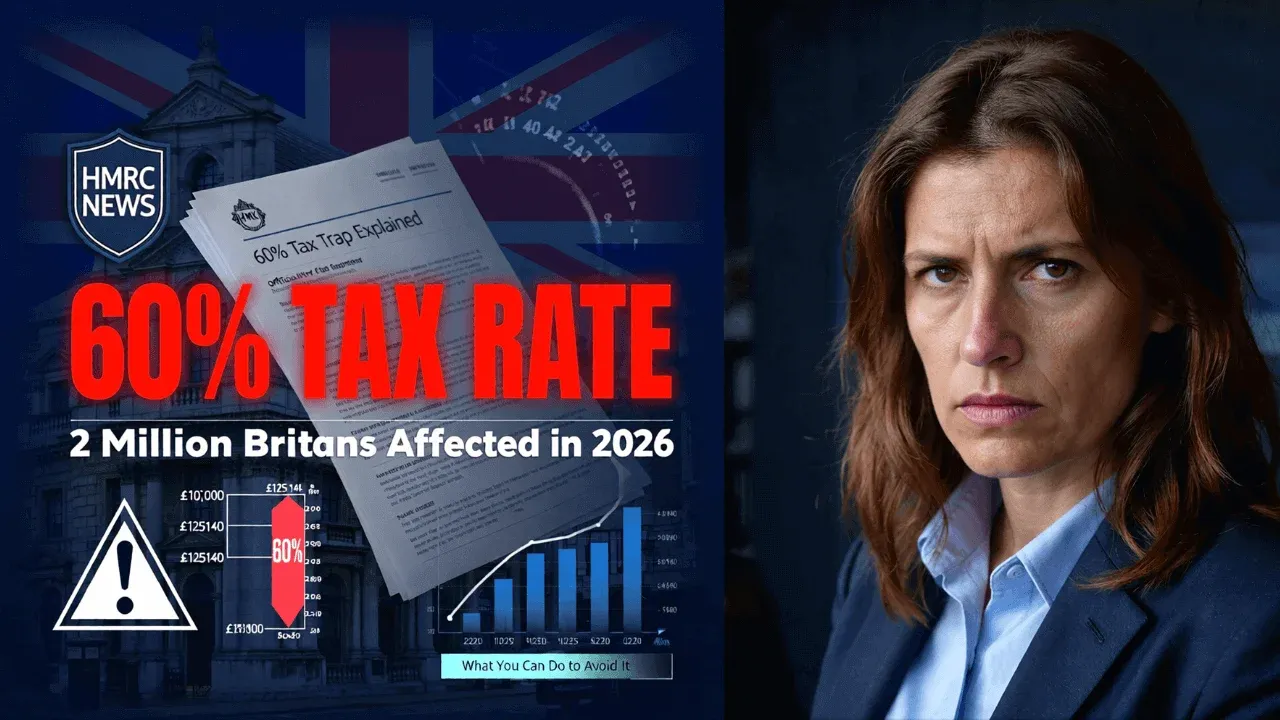
Around two million people in the UK are expected to be caught by the so-called 60% tax trap in 2026, according to current income tax rules. Despite the alarming name, this is not a new tax band. Instead, it is the result of how income tax and the personal allowance interact once earnings pass a certain level.
As tax thresholds remain frozen and wages rise due to inflation, bonuses, and promotions, more professionals are being pulled into this high-tax zone without realizing it. For many, the shock only comes after reviewing their annual tax summary.
What the 60% Tax Trap Actually Means
The 60% tax trap applies to people earning between £100,000 and £125,140. Within this range, the personal allowance is gradually withdrawn. For every £2 earned above £100,000, £1 of tax-free allowance is lost.
This means individuals are taxed not only on their extra income but also on income that was previously tax-free. The result is a much higher effective tax rate than most people expect.
Why the Effective Tax Rate Reaches 60%
Normally, higher-rate taxpayers pay 40% income tax. However, within the personal allowance taper zone, each extra pound earned is taxed at 40% and simultaneously removes tax-free income.
This combination produces an effective marginal tax rate of around 60%. It often surprises people who believe they are simply moving through the higher-rate tax band.
Why So Many People Are Affected in 2026
The main reason more people are affected is the continued freeze on tax thresholds. While salaries rise over time, the £100,000 threshold has not moved.
By 2026, many individuals who never considered themselves high earners will find themselves within the taper zone due to inflation-linked pay rises, performance bonuses, or pension growth.
Who Is Most Likely to Be Caught
The tax trap commonly affects doctors, senior teachers, engineers, managers, consultants, and technical specialists. In many cases, it is not a deliberate pay rise that causes the issue, but overtime, bonuses, or employer pension contributions.
Households with two earners may also be affected if one partner’s income rises slightly above £100,000.
Why Many People Do Not Notice It
Under the PAYE system, tax is deducted automatically, which can hide the true marginal rate. Many people only discover the issue when checking their annual tax calculation or completing a self-assessment.
By then, it may be too late to reduce the impact for that tax year.
How Frozen Thresholds Make the Problem Worse
The personal allowance taper has remained unchanged for years, while earnings have increased. This has quietly expanded the number of people affected.
If thresholds remain frozen beyond 2026, the problem is expected to grow further.
Why Bonuses Can Cause Unexpected Tax Bills
A one-off bonus can easily push income over £100,000, even if base salary is below the threshold. This can lead to a much larger tax bill than expected.
Many people only realize this after the bonus has already been paid and taxed.
The Role of Pension Contributions
Pension contributions are one of the most effective legal ways to reduce exposure to the 60% tax trap. Contributions lower adjusted net income, which is the figure used to calculate the personal allowance taper.
In some cases, increasing pension contributions can bring income back below £100,000 entirely.
How Salary Sacrifice Can Help
Salary sacrifice schemes allow employees to exchange part of their salary for pension contributions or other benefits. This reduces taxable income at source.
For those close to the threshold, this can be a particularly efficient approach.
Understanding Adjusted Net Income
Adjusted net income is not the same as gross salary. It takes into account pension contributions, Gift Aid donations, and certain tax reliefs.
Understanding this figure is essential for anyone trying to manage their tax position.
The Hidden Impact on Childcare Support
Crossing the £100,000 income level can also mean losing access to tax-free childcare and free childcare hours.
For families, this loss can significantly increase overall costs, making the real impact of the tax trap even more severe.
Why Parents Feel the Pressure More
Parents with young children often face a double hit: higher income tax and reduced childcare support. In some cases, small pay rises leave families worse off.
This has led some parents to reduce working hours or turn down promotions.
Why Planning Before the Tax Year Ends Matters
Most tax-planning options must be used before the end of the tax year. Once income is received, choices become limited.
Early awareness allows individuals to make informed decisions rather than reacting too late.
Charitable Giving and Tax Efficiency
Gift Aid donations reduce adjusted net income and can help limit the impact of the taper. For those already planning to give to charity, this can improve tax efficiency.
However, donations should align with personal values, not be made purely for tax reasons.
Challenges for the Self-Employed
Self-employed individuals may have more control over income timing, but irregular earnings can make planning more complex.
Careful forecasting is especially important for this group.
What Happens If No Action Is Taken
Without planning, income within the taper range will continue to be taxed at the higher effective rate. Over time, this can amount to thousands of pounds in additional tax.
Many people accept this simply because they are unaware of available options.
Why the 60% Tax Trap Remains Controversial
Critics argue that the system is poorly understood and unfairly punitive. Supporters say it raises revenue without increasing headline tax rates.
Despite the debate, the rules remain unchanged for 2026.
How to Check If You Are Affected
Reviewing your adjusted net income and tax code is a good starting point. Online tax accounts can provide helpful summaries.
In complex situations, professional advice may be worth considering.

Hi, I’m Faiq, the person behind Asdbn. I started this website to share mobile and tech news in a simple and honest way. I regularly follow smartphone launches, updates, and trends, and I like to write about things that are actually useful for readers. My focus is to keep the content clear, genuine, and easy to understand, so anyone interested in mobile and technology news can benefit from it.